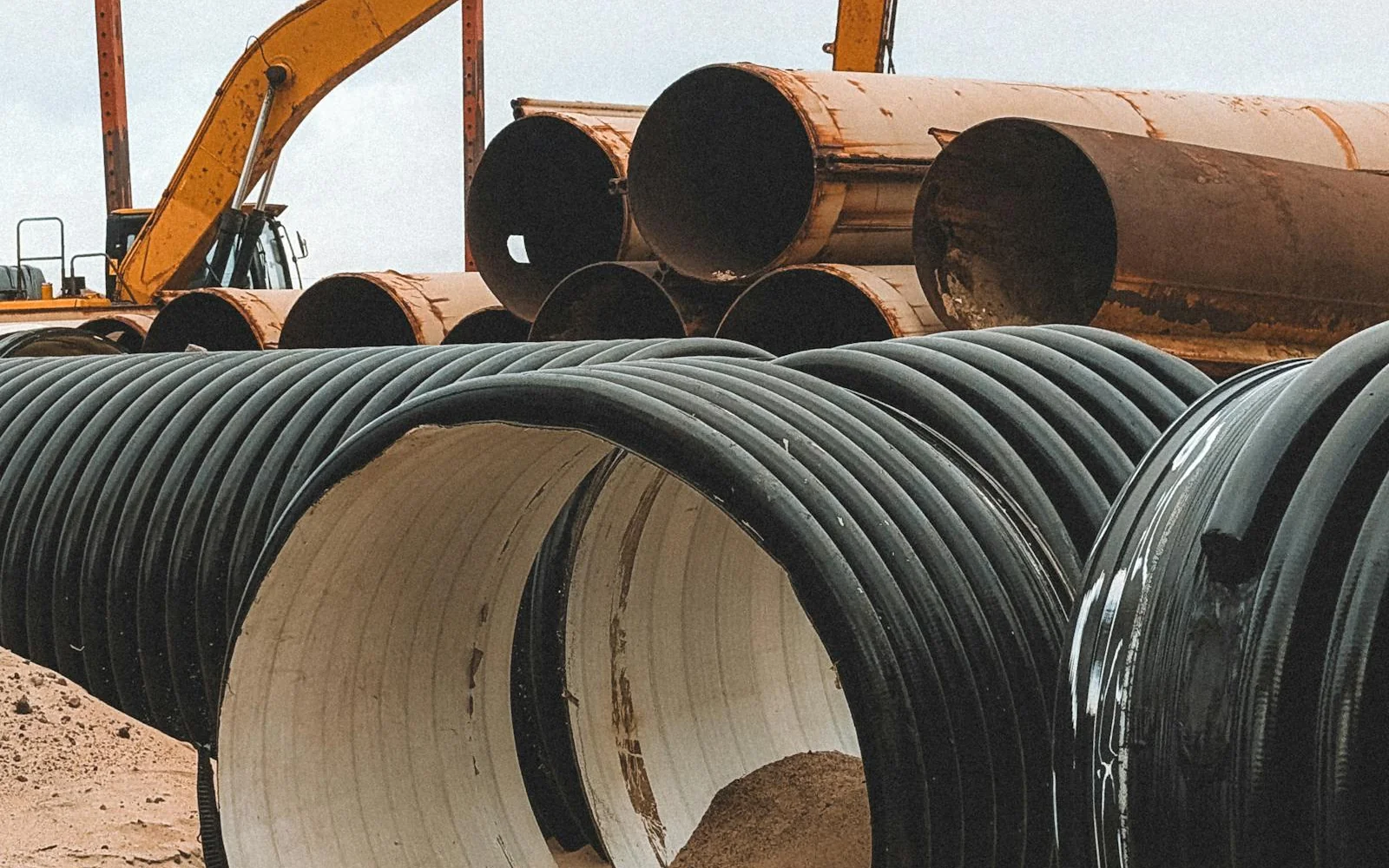
Why is HDPE leading infrastructure projects?
High-Density Polyethylene (HDPE) is increasingly the standard for underground wastewater, drainage and potable-water lines. Its corrosion resistance, flexibility and long service life set it apart from metal and concrete.
This article covers HDPE's environmental advantages and the considerations for cold-climate applications. (Note: VALA Pipes' product portfolio is PPR-C-focused; HDPE is typically specified by infrastructure contractors.)
Environmental advantages
Recyclability: HDPE is 100% recyclable. At end of service life, it can be melted down and reused in new pipe production.
Low carbon footprint: production energy is lower than metal alternatives, and the lighter shipping weight reduces site-related carbon as well.
No corrosion: it does not undergo chemical bonding reactions; estimated underground service life of up to 100 years.
Fusion (welding) capacity
HDPE pipes are joined using butt-fusion or electrofusion. When applied correctly, the joint is stronger than the pipe body itself — under pressure testing, the failure point is the parent pipe, not the weld.
Site fusion is performed around 200°C — lower than the 260°C of PPR-C — but time and pressure parameters are critical.
Considerations in cold regions
HDPE's glass transition temperature (Tg) is around -100°C; in theory, it retains flexibility under very cold conditions. However, impact tests (Charpy notched) show reduced values at -20°C and -40°C.
In cold climates such as Siberia, Eastern Anatolia and northern Europe, two points need attention during excavation and laying: (1) the excavated soil should not strike the pipe directly, and (2) all fittings used must be the same HDPE class.